AI VISIBILITY MEASUREMENT ·
How I tracked
AI citations.
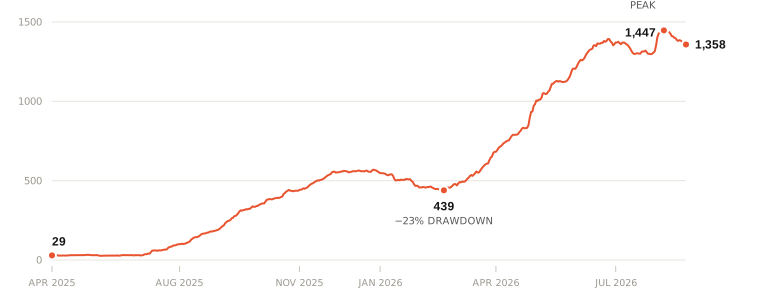
A tracked citation count is evidence of source visibility inside AI answers—not proof of traffic, revenue or complete market coverage. Over 16 months the tracked figure for the roadsurfer US brand set moved from 29 to 1,358, and this page keeps the definition, the source and the limits explicit.
DIRECT ANSWER
How to track AI search engine citations
Define the platforms, topics, prompts and reporting window before collecting results. Record each visible source reference consistently, separate citations from mentions, and preserve platform-level totals. Compare the citation trend with rankings, impressions, clicks and sessions, because citation visibility alone does not show traffic or commercial impact.
THE SERIES
A trailing number, not a running total.
The tracked citation figure is a trailing measure: it reflects what the tracked prompt set is finding now, so it falls as well as rises. Reporting it as a single number hides that. The series is the honest artifact.
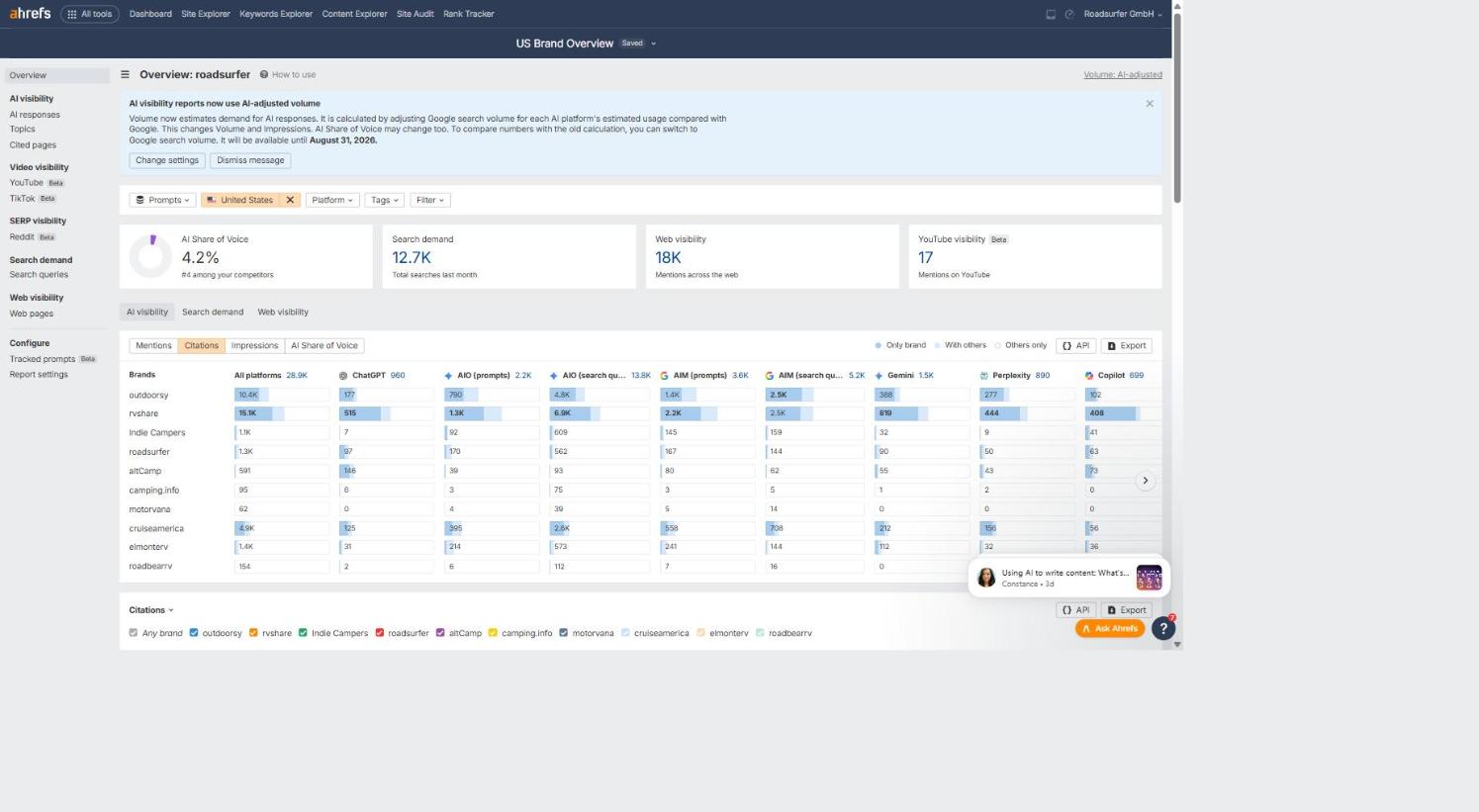
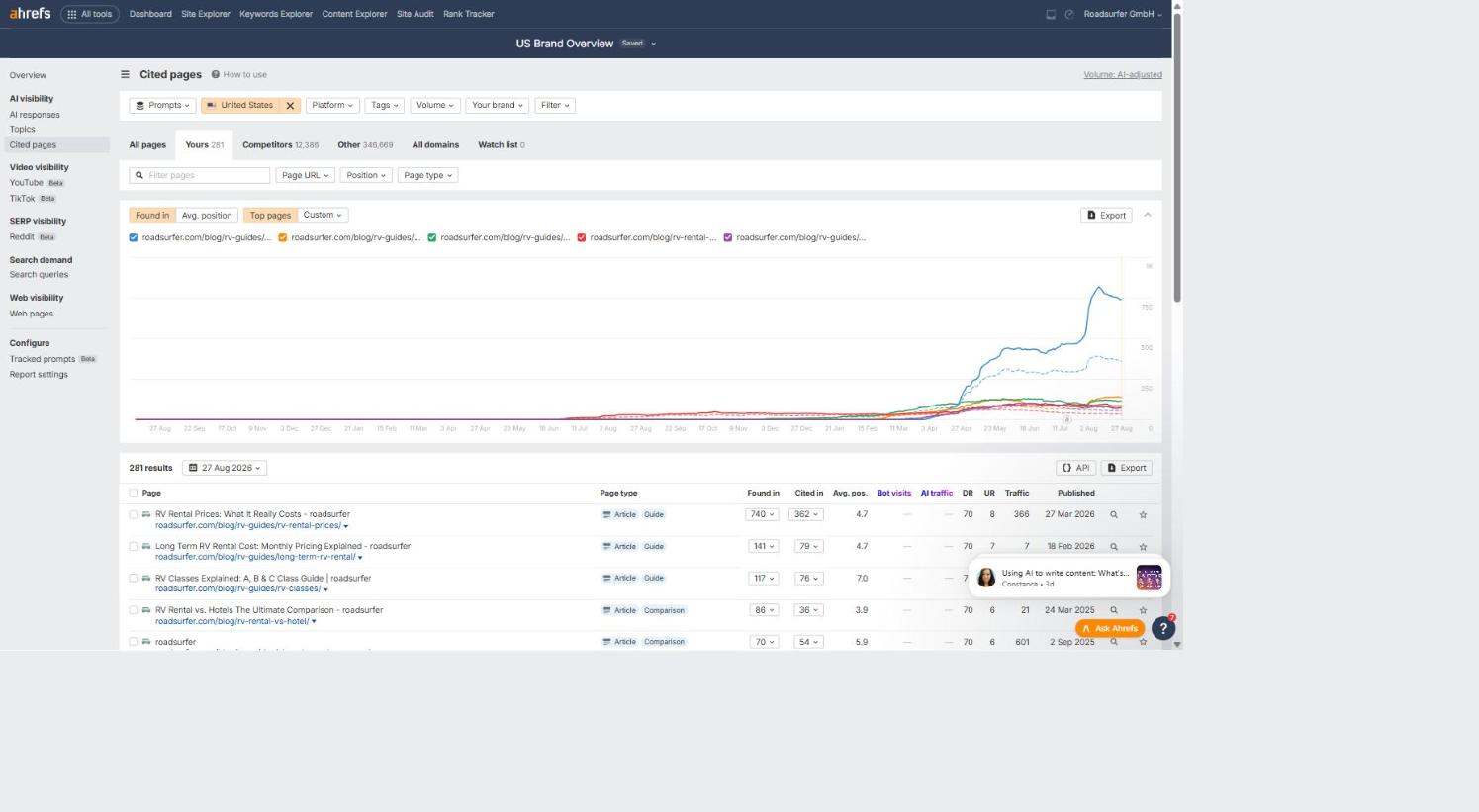
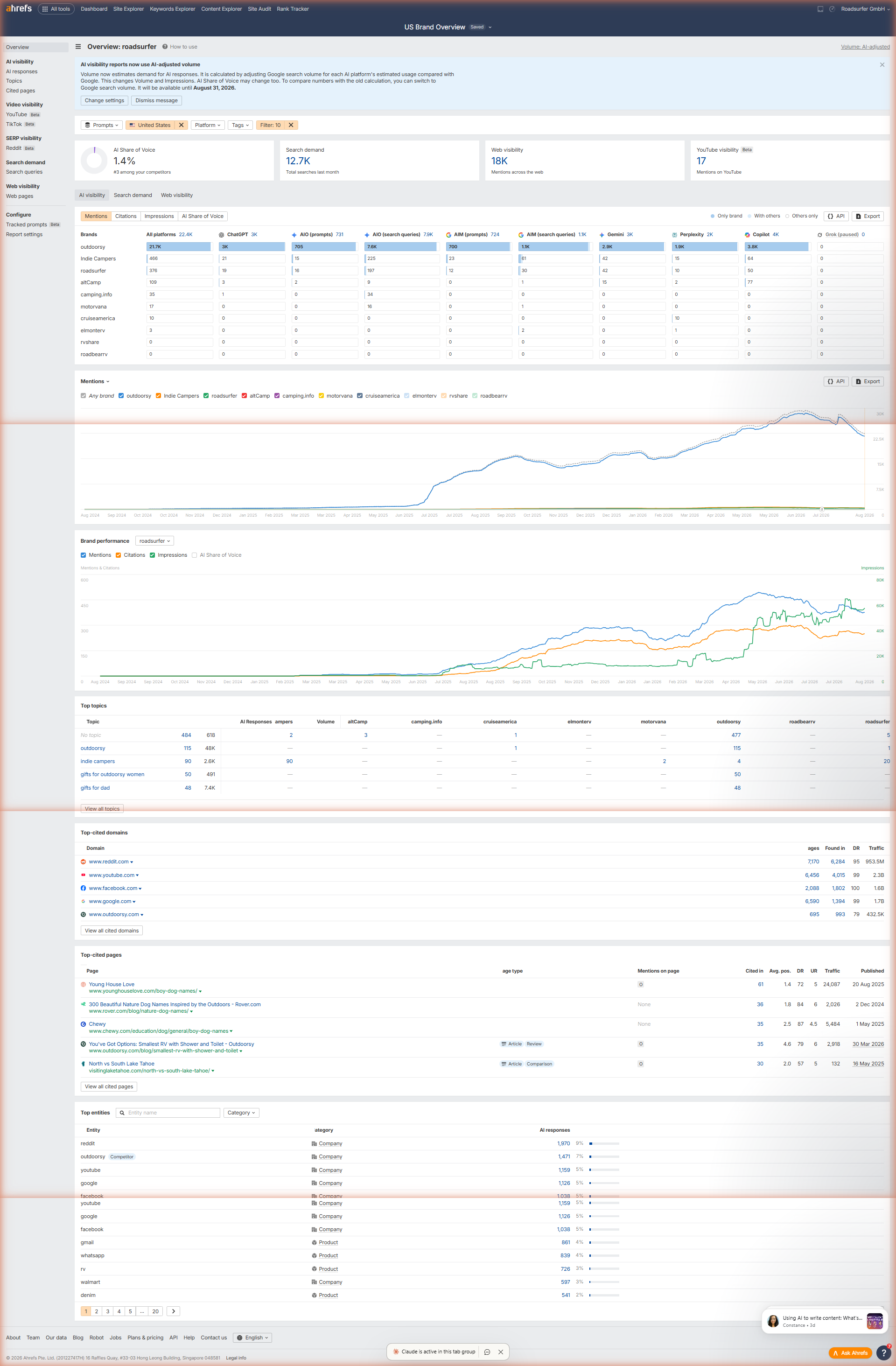
Full Ahrefs captures: mentions and citations
These filtered views document the interface and report context. Their table values are not the source of the published site-wide total.
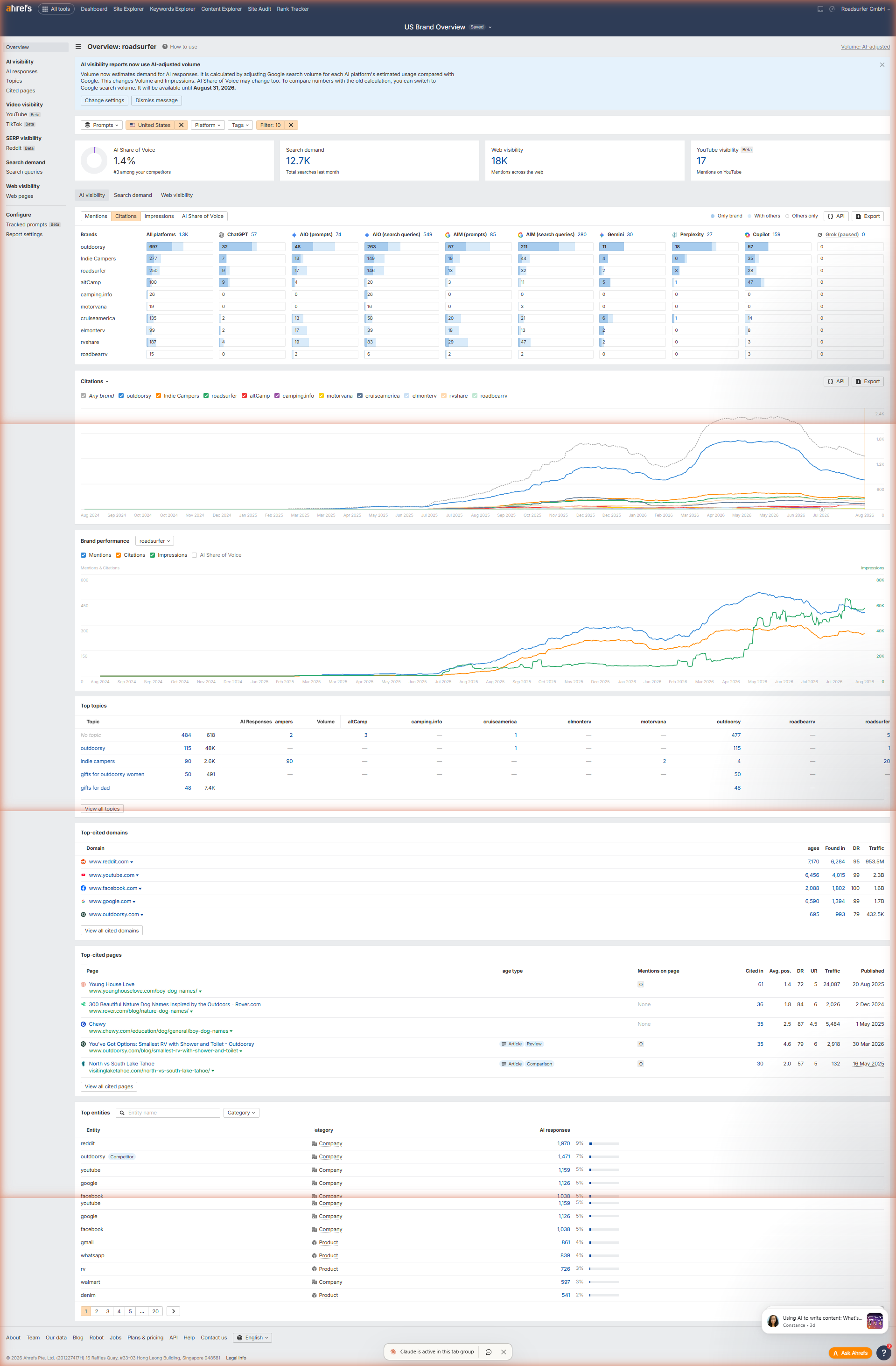
Two features matter more than the endpoint. The −23% drawdown between December 2025 and February 2026 happened without any change to the content — platform behaviour moved, not the pages. And the peak sits ahead of the current value, which is why a dated figure beats a headline number.
WHY I STARTED TRACKING
Rankings improved while click-through fell.
On the US blog, average position improved from 16.1 to 9.3 while click-through rate fell 56%. A concentrated group of top-ten pages generated substantial impressions at less than 0.5% CTR. That page-level pattern suggested that visibility was increasingly being absorbed before the click by AI answers and richer search-result experiences.
The response was an AEO/GEO programme built around clear entities, extractable answers, evidence, page structure and citation monitoring. The full organic-search evidence is documented in the roadsurfer case study.
MONITORING
How to monitor AI search visibility
Monitor a stable set of commercially relevant and informational prompts across the AI platforms your audience uses. Track whether the brand is cited, merely mentioned or absent; record the cited URL and answer context; then review trends alongside search performance and qualified business signals.
Stability matters more than volume. Changing prompts, platforms or definitions during the reporting window can make a rising total look more meaningful than it is.
ENTITY VISIBILITY
How to track brand mentions in AI search
Run repeatable prompts that describe the category, problem and buying situation without forcing the brand name. Record linked citations and unlinked mentions separately, note competitors appearing in the same answers, and use the resulting gaps to prioritize clearer evidence, stronger entity signals and more useful source pages.
MEASUREMENT DISCIPLINE
What I would—and would not—claim.
- Would claim: the tracked figure moved from 29 to 1,358 between 24 April 2025 and 24 August 2026, in the named report and scope.
- Would not claim: that this is a cumulative total, that the earlier state was provably zero, that every AI answer was observable, or that any citation produced a click.
- Would improve: establish stable prompts, platform definitions and a baseline before optimization begins.
- Would measure alongside it: non-brand rankings, impressions, CTR, sessions and qualified business signals.
FREQUENTLY ASKED
Questions to ask of any citation number.
How to track AI search engine citations
Define the platforms, topics, prompts and reporting window before collecting results. Record each visible source reference consistently, separate citations from mentions, and preserve platform-level totals. Compare the citation trend with rankings, impressions, clicks and sessions, because citation visibility alone does not show traffic or commercial impact.
How to monitor AI search visibility
Monitor a stable set of commercially relevant and informational prompts across the AI platforms your audience uses. Track whether the brand is cited, merely mentioned or absent; record the cited URL and answer context; then review trends alongside search performance and qualified business signals.
How to track brand mentions in AI search
Run repeatable prompts that describe the category, problem and buying situation without forcing the brand name. Record linked citations and unlinked mentions separately, note competitors appearing in the same answers, and use the resulting gaps to prioritize clearer evidence, stronger entity signals and more useful source pages.
What is an AI search citation?
An AI search citation is a visible reference or linked source used by an AI-generated answer. Citation formats and coverage differ by platform, so counts should always name the tools and measurement window behind them.
Does a citation count mean visits?
No. A citation is a source reference inside an AI answer, not a click and not a session. Citation counts are visibility metrics, not traffic metrics.
Did the programme grow from zero citations?
The defensible wording is “from no measurable presence.” Tracking coverage matured during the period, so the earlier state was under-observed rather than provably empty.
Sources and limits
Sources: Brand Radar “US Brand Overview” report, all tracked platforms, United States, daily series 24 April 2025 – 24 August 2026, pulled via the Ahrefs API. Google Search Console export for the roadsurfer US blog through 24 August 2026. Compiled 27 August 2026.
Limits: This is a trailing metric from one named report and scope — a different report or filter set returns a different figure, so the scope above is part of the number. Platform coverage changed during the period (Grok is paused in this report; Claude is not tracked), which is why no per-platform split is published here. Citation counts are not traffic counts, and the optimization methodology is not published.